France protests: should you keep or postpone your trip?
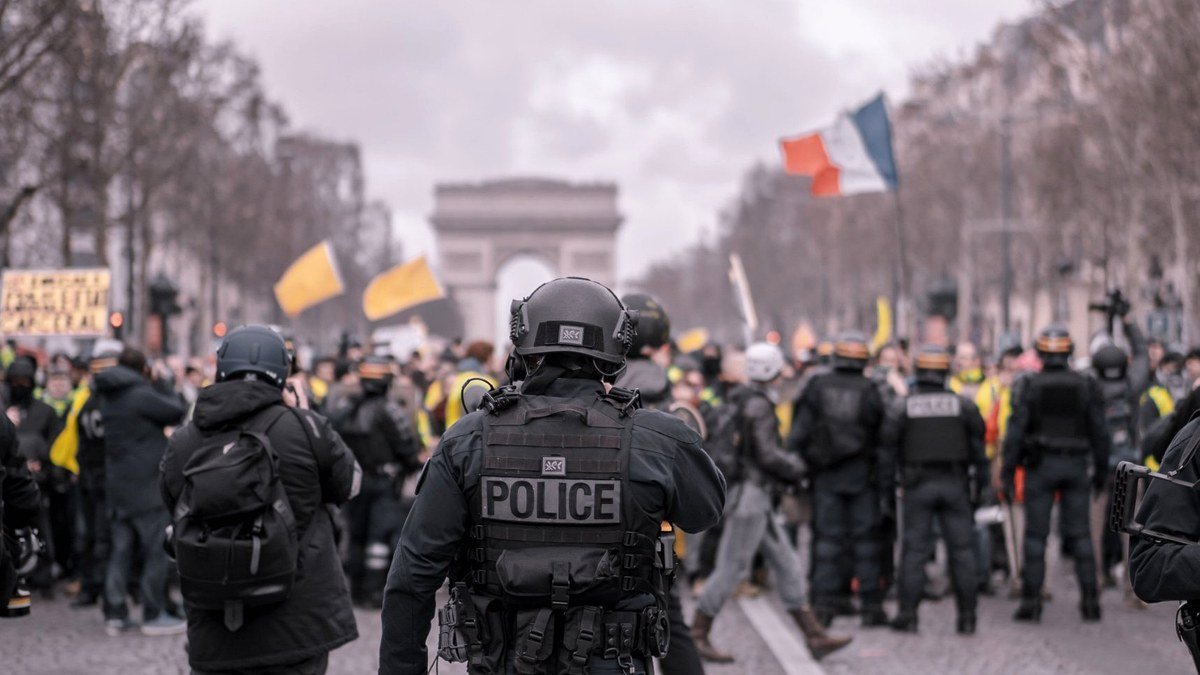
The Louvre closed on a Saturday, metro stations shut, curfews in some neighborhoods… Since mid-October, France has been going through its most tense wave of protests in years. And many travelers are asking the same question: should you keep your trip or postpone it?
Here are the verified facts, without exaggerating or downplaying, and what they actually mean for you.
What is happening in France?
The movement started in late September with student protests and high-school blockades, then grew into wider anger over the rising cost of living, joined by trade unions and "yellow vest" activists.
October 17: a very violent day
On the first major day of protests, cars were set on fire, public buildings were stormed and shops were looted, notably in Paris, Lyon, Marseille and Limoges. According to the French Interior Ministry, the day ended with more than 2,000 arrests and over 1,500 businesses looted. In Lyon, the tourist office was even set on fire.
October 24: an exceptional security operation
For the next protest day, around 70,000 police officers and gendarmes were deployed. As a precaution, many Paris venues closed on that Saturday only:
- the Louvre, the Musée d'Orsay, the Orangerie and the Picasso Museum;
- the Petit Palais, the Carnavalet Museum and Victor Hugo's House;
- the Fondation Louis Vuitton and the Bourse de Commerce.
These sites reopened the next day: closures only affect major protest days. The Ministry's tally for October 24: more than 1,300 arrests, but only 24 businesses looted, a sharp drop from the previous week.
Upcoming dates to watch
- Saturday, October 31: a new day of protests. The Interior Minister plans an "extremely robust" police deployment. Museums could close again that day.
- Tuesday, November 3: the budget vote in Parliament, which could trigger rallies.
- Thursday, November 5: a nationwide strike and marches, plus an SNCF rail strike that may disrupt TGV, Intercités and regional trains.
Curfews: what is the current situation?
There is no nationwide curfew in France. Curfews are local, from 11 pm to 6 am, set by regional prefects and limited to a few neighborhoods. In Paris, it was narrowed on October 26 to the Place de la République area (it previously also covered Les Halles). The government says they will remain "in the coming days", with no end date. Paris airports and long-distance trains are running normally; metros, buses and trams are disrupted mainly on protest days.
✅ Pros / ❌ Cons: should you keep your trip?
✅ Reasons to keep your trip
- No official advisory asks travelers to cancel: as of October 23, neither the US, the UK nor Germany asked travelers to postpone. They only urge caution.
- The unrest is localized and concentrated on days announced in advance: you can plan your sightseeing around them.
- Hotels, restaurants and attractions remain open most of the time. Tour operators interviewed report no mass cancellations by their clients.
- Industry professionals point out that media images can overstate the situation and that unnecessary cancellations hurt French tourism.
❌ Reasons to worry (or postpone)
- Looting and property damage have hit several major cities, including tourist areas.
- Curfews, bans on gatherings and museum closures can spoil a short stay.
- New dates are already planned (October 31, November 5), and their scale is hard to predict.
- Hotel bookings are weakening in major cities, a sign that many travelers are hesitating.
What this means for you
- Avoid protest weekends for major sights (Louvre, Orsay…) or have a plan B.
- Check opening hours of museums and monuments the day before, and RATP, SNCF and airport updates on the day.
- Stay away from marches, even peaceful ones, and follow police instructions.
- Pick a hotel outside sensitive areas (République and Les Halles in Paris).
- On November 5, avoid traveling by train or check your ticket in the SNCF app: strike timetables are published at least 24 hours in advance.
- Choose a free-cancellation rate: you keep the freedom to postpone. And if the price drops before you leave, Prixofy helps you compare and re-check your hotel price.
- Stay online everywhere to follow the news in real time with an eSIM (Airalo or Saily, see our comparison).
Key takeaway: no official advisory asks travelers to cancel a trip to France, but October 31 and November 5 are likely to be disrupted. Plan your visits outside those dates and book a hotel with free cancellation.
Plan your trip to France
- Activities, skip-the-line tickets and day trips you can book flexibly: see activities in France on Klook
- Stay connected to follow alerts: Airalo or Saily
- Avoid disrupted public transport with a private transfer: our transfer deals
- Tours and experiences beyond the big museums: discover our ideas
What do you think?
Are you planning to visit Paris, Lyon or Marseille in the coming weeks? Are you keeping your trip, or would you rather wait for things to calm down? Tell us in the comments!
Sources
- Africanews, October 21, 2026: French tourism sector concerned about impact as more protests planned
- Africanews, October 23, 2026: France deploys 70,000 police, shuts Paris museums ahead of protests
- The Art Newspaper (French edition), October 23, 2026: Manifestations du 24 octobre : plusieurs institutions culturelles resteront fermées
- Sortiraparis, October 23, 2026: October 2026 protests: Are foreign tourists being asked to postpone their stay?
- Travel Market Report, October 20, 2026: Is It Safe to Travel to France Right Now?
- TRT World, October 25, 2026: French unions call for fresh protests after more than 1,300 arrests
- The Rio Times, October 26, 2026: France Keeps Curfews After 1,435 Arrests
- Travel Pirates, October 27, 2026: Is It Safe to Travel to France Right Now? Curfews, Closures, and Strike Dates
Your take
With the protests, are you keeping your trip to France?
Was this article helpful?